


În partea a patra a dosarului tematic „Ștefan Baciu”, vă propunem un text de antropologul japonez Ryuta Imafuku, care a folosit figura și destinul exilatului Baciu ca punct de pornire pentru ceea ce Imafuku a numit „viziune arhipelagică”. Viața lui Ștefan Baciu devine, în acest context, un model de „geografie imaginară” în care spații disparate sunt legate între ele prin poezie, memorie și nostalgie – un „mapamond poetic” fluid și deschis. Mai multe detalii despre teoria lui Ryuta Imafuku găsiți în eseul „Ştefan Baciu, Archipelagic Poet from Romania” de Yoshiro Sakamoto, eseu pe care îl găsiți aici. Textul „A Dream Journal for Ștefan Baciu” a apărut în revista „MELE Arhipelago. Scrisoare arhipelagică de poezie”, număr aniversar, din decembrie 2018, dedicat centenarului nașterii lui Ștefan Baciu, număr îngrijit de Yoshiro Sakamoto, căruia îi mulțumim pentru acordul de a-l republica pe Literomania. (Literomania)
Ryuta Imafuku
A Dream Journal for Ștefan Baciu
September 8, 2016
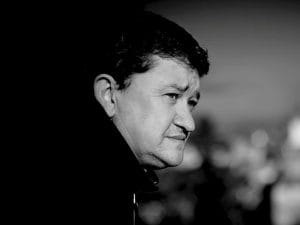
Ștefan, I have not been to Honolulu for a long time. More than twenty years have passed since your wandering 74-year life ended on this island. One year after our intense heartfelt dialogue at Arcadia (1), you left us for the eternal kingdom of poetry, where your compatriots in exile share your diasporic longings. I had no chance to come back sooner, but held the memory of that dialogue so deeply in my heart that I am here, now, to pick it up again with your shadow.
In 1994, a book of your poetry, „Peste o mie de catrene”, was published in a limited edition by Aldus Publishing House in Brasov. It is an anthology of Romanian quatrains that you wrote from your soul, as a diary, one each day, for three years. These would be the last poetic breaths of your life. A little more than three months after our dialogue, for reasons none of us will ever know, on July 8, 1992 you put down your pen on number 1042, the last quatrain.
On the day of my visit, April 24, 1992, Honolulu’s generous springtime was ending and summer days were bringing warm, strong light. You showed me quatrain number 905, at the very moment it was finished. Its four lines flowed then like an ant path, an enigmatic blur on the paper. They are now illuminated with meaning, the letters clear and distinct.
Paper is my standard, torn in battle
With the poetry that always visits me —
Scarred forehead, broken joy —
But like a hawk, thought is standing guard. (2)
The sufferings of half of century in exile deeply penetrate these strong and upright rhymes. Your thoughts start from the struggle of drifting on the white paper, grasping it tightly with your hand, moving in the right direction toward peaceful resignation, toward acceptance of the impossibility of the return for which you had longed for decades, and toward the intense craving for life. It seems to me that you are the incarnation of the hawk himself rather than the hunter of words mastering him, standing guard concealing the painful passion in the claws waiting for the “moment.”
Here on this island I look for traces of your friend Jean Chariot, a wandering artist born in Paris at the end of the nineteenth century. He was a muralist who painted for the people—workers and citizens—traveling from France, settling in Mexico, moving to New York, Georgia, Colorado, and finally Hawai`i. Your route from Romania to Brazil where you deeply embraced poetry and Latin-American art before reaching the Hawaiian archipelago, naturally resonates with Chariot’s itinerancy in various ways. A strong and mysterious diasporic communion must have been generated through this phenomenal encounter.
On the beautiful green campus of the University of Hawai`i at Mȃnoa, I saw Chariot’s formidable murals installed in several buildings, the subjects mostly relating to Hawaiian rituals or religion.
Just yesterday, I stood before his mural, „The Relation of Man and Nature in Old Hawai `i”. On the first floor of Bachman Hall, it attracted me strongly. It is a big fresco, as you know very well. Chariot painted it in 1949. It respects the sacred air of unification between man and nature. At the bottom are ̓ilio, poi dogs, the ancient Hawaiian dogs, transmitting to people the voices of the old Hawaiian spirits. In ancient times, in Hawaii, mothers also nursed the poi dogs. The procedure of giving food and drink mouth-to-mouth or hand-to-mouth is universally a profound ritual of communion because it is the transportation of wisdom that comes directly from the mouth into the body, becoming bones and blood. Chariot greatly respected the interaction between nutrition and wisdom that ancient people inherited and that always flowed through their bodies in their mythical cosmos.
Ștefan, in front of this mural, with deep sympathy for those experiencing the fate of exile, I whisper your poem dedicated to Jean Chariot, and published in your poetry anthology, „Ukulele”.
Jean Chariot
With an eye in the heart
and another in the neck
he saw everything
loose pages of Apollinaire
carried in a pocket to Mexico
where he put
on a wall incandescent
the first mural
as he would leave
the fingerprints
on a passport
dialogues with Indians
engravings in books
with cities smashed between the pages
murals in Fiji and Hawaii
on walls of prayer
(…)
warriors for the combat
with the fire in which
there is no truce neither blood. (3)
You wrote in quatrain number 905 of the endless struggle under the sign of the broken standard. I guess you are declaring this warrior’s truth here as a tribute to your elder friend. The flame that will never be extinguished in the warrior’s body… There is no possibility of armistice here, though bloody massacre does not exist either. It seems to me that your poems, like Chariot’s murals, have with sincerity and suffering faced the absurdity of forcing you to engage in such an innocent and isolated struggle, unfolding your life generated from it and also the Muse’s soaring.
On the way home, after seeing Chariot’s murals at the university, I experienced a very interesting incident. The destination of the bus I rode was Liliha Street, a little beyond downtown. In that bus there were people with countless different types of faces and skin colors. I saw a whitish puppy in a passenger’s arms. I think she was part Samoyed. The man held her desperately on his knees because she tried to jump on the people around her. Eventually she gave up and stayed quiet. Her faithful and admirable attitude made me, who took a seat beside her, smile naturally with joy. She started licking my hand, her tongue warming my palm. I was sure she was female. I called her Liliha, imagining from our communion that she was an incarnation of the indigenous Hawaiian dog, ̓ilio. If I try to paraphrase the meaning of the word “Liliha” from Hawaiian, it would be “a choked smell of wealth and enchantment.” It is also the name of the chief in 0`ahu Island under the sovereign Kamehamea II. More and more, she spread her joy to the passengers around her, and my hands got warmly wet.
I got off the bus in front of the Honolulu Museum of Art. It was a coincidence that Liliha and her owner got off the bus just after me. To my astonishment, there was no collar around Liliha’s neck. He dropped her to the sidewalk, and they started to go home together. She followed him, vigorous, jumping, jubilant. I have never encountered such a beautiful scene where man and dog accompany each other so freely with no chain or rope. They were going home but I felt, if their home existed anywhere, it would be somewhere just beyond the rainbow hanging on the mountains behind Honolulu.
Ștefan, I remembered then your superb poem, „Home”, published in your anthology, „Poemele poetului singur. 1970-1980”.
Home
Home is an apple
in a Japanese grocery window
on Liliha Street
in Honolulu, Sandwich Islands
or a gramophone record heard in silence in Mexico
— Maria Tanase beside the volcano Popocatepetl —
home is Brancusi’s workshop in Paris
home is a Grigorescu landscape
(…)
home is a skylark that soars
anywhere
without borders and without plans
home is a Dinu Lipatti concert
in Lucerne, Switzerland, on a rainy evening
home is this gathering of faces
of events and sounds
scattered across the globe
but home is
especially
a moment of silence.
This is home. (4)
Here, the painful shadows of your compatriots who have scattered around the world come together in your imaginary poetic microcosm. Artists, singers and writers in exile who have fled the oppression of the nation gather together, weave with music and words a new country of their own with the force of imagination. This homeland does not mean only Romania, but also an unknown nostalgic territory created in diasporic lives. Could it be called the Republic of Hope? I could do nothing but listen solemnly, deeply stunned, to the roar of the water vein of oblivion as they spread underground into the abyss of your „home”, imagining what spaces and times were gathering and consolidating together, imagining what great hopes you have been craving for in this poem.
Liliha Street seems just over there. The rustic Japanese grocery with an apple in the showcase no longer exists. Instead, I could see only disordered crowded buildings but we still have „Liliha” today. Your memories begin to „move into” the steps of that vigorous hybrid puppy. I do not know why, but that’s how I feel.
Stefan, I remember your serious silence, the moment when you hesitated and stopped talking, stuttered a little, just after you told me you wrote Romanian poems every day. You wrote „but home is/ especially/ a moment of silence”. A blank line follows, then finally you wrote „This is home”. This blankness, this spatial void must be your true home. This white abyss, this muted road… In the hybrid puppy’s steps as she was about to enter the narrow opening of the alley behind Liliha Street I suddenly felt as if I heard the echo of your guttural voice.
END NOTES
(1) Arcadia Retirement Residence in Honolulu, where Ștefan Baciu lived his last years.
(2) Baciu, Ștefan. „Peste o mie de catrene. Sub Tâmpa din Honolulu”, Brasov: Aldus, 1994.
(3) Baciu, Ștefan. „Jean Chariot” In: „Ukulele”. Honolulu: Menehune Press, 1972.
(4) Baciu, Ștefan. „Patria”. In: „Poemele poetului singur”. Honolulu: Editura Mele, 1980. English translation by Joel Bradshaw.
Translated from the Japanese by Yoshiro Sakamoto. Original Japanese version was published in: Ryuta Imafuku, „Border Chronicles”, Tokyo, Suisei-sha, 2017
Sursă foto aici
Acest articol face parte din Dosarul „Ștefan Baciu, un scriitor brașovean în exil”
Sumar Literomania nr. 389-390 (2025)


Scrie un comentariu