


The publication of a book touching on the lives of people living under a totalitarian regime tends to be received, if not with outright distrust, at least with a certain degree of reticence caused, undoubtedly, not only by the large array of writings on this topic published, particularly in recent decades, in the most varied cultural spaces, but also by the readers’ and critics’ inherent belief, which need not even be made public anymore, in the almost implicit contamination of such pieces of writing with the everlasting complications of a more or less obvious bent for „political correctness” – right-wing or left-wing being, in the present context, details of lesser importance. Nevertheless, there are exceptions meant to convince even the most sceptical readers that such a topic is indeed valid from an aesthetic point of view. Especially in the age we live in.
Certainly, when this is evinced in a debut novel things become even more amazing. And on a close reading, „The Septembers of Shīrāz”, Dalia Sofer’s novel published in 2007, proves to be anything but a book about dictatorship, much less a fiction work attempting to legitimize a particular political or ideological stance, but mainly one about estrangement and sadness, about loss and reconnection. In actual fact, in every way, a book on the contemporary human condition, on loneliness and, obsolete as it may seem, on the possibility of redemption by love. And certainly a book on suffering, especially in light of the period that the writer chose to cover and of the world amidst which the events in which the characters partake occur.
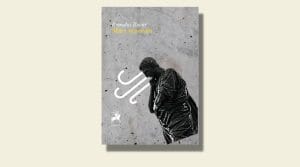
„The Septembers of Shīrāz” – we infer from the very title – depicts a series of events undergone by a family living in Iran. So far, nothing out of the ordinary. But the book is by no means a family novel or an exotic one at that, even if the very place where everything occurs might at first sight suggest something of the kind as well. Marking the outstanding debut of the young writer, this novel is the undisputable proof of Dalia Sofer’s talent and of her perfect command of the narrative means of which she availed herself in an attempt at convincing her readers about her ability to delve into such a topic. For „The Septembers of Shīrāz” places everything, from the very beginning, under the sign of violence, of arbitrariness, of fear and of the chaos instilled in Iran (especially in Tehran) after the onset of the Iranian Revolution. The plot centres on the condition of the Amin family as of the day when Isaac, a husband and a father of Jewish descent, is arrested in the office of the small jewellery workshop that he owns. Certainly, the moment in which the urbane rare-gem shopkeeper is arrested is resonant of Kafka’s „The Trial”, but this detail neither renders the tension of this episode less intense nor makes the novel mawkish. What it does is maybe prove that incidents of this kind greatly exceeded, at the end of the twentieth century, the clearly-defined framework of the former symbolic and parabolic novel.
Written in the third person, mainly in the present tense, the storylines that shape Dalia Sofer’s novel tag along the lives of all the members of the Amin family over a period of one year, probably the most gruelling one in their entire existence, with the events spanning from September 1981 to September 1982. So that, after Isaac Amin – whose past is „tainted” from the standpoint of the more than extremely zealous representatives of the Revolutionary Guards because at one time he had sold jewellery to some members of the former Iranian aristocracy – is arrested (in a narrative instance which, apart from the obvious Kafkaesque touches, is redolent of the dystopian universe of Orwell’s fiction), all the members of his family will, in turn, be in the forefront of the narrative, so that the book is by no means reduced to the mere story of a prisoner’s life: Farnaz, his wife, who devises desperate plans to set her husband free, as well as their two children – Parviz, who has recently left for New York to study Architecture, and Shirin, the girl who has just turned nine and who is forced to understand, at much too early an age, that life is a lot more complicated and infinitely more cruel than the world of fairy-tales. Thus, the novel is gripping, in entirety, from the very first chapters, mainly by the actually simple – to all intents and purposes – questions that the readers cannot help asking: what will happen to Isaac Amin in such a rough prison run by some human beings who have done nothing but replace, much too fast, crowns with turbans and who command that, in such a space, time does not matter in the least? Is he likely to be executed by the firing squad, will he die as if by accident or will he remain imprisoned for years? But at the same time countless questions arise about Farnaz and her desperate attempts to save her husband: will she find him, will she be able to sweep over the vigilance of the Revolutionary Guards, will she be able to go on with her life and if not, what would the consequences be? In this context, little Shirin’s position becomes ever-more clear and all the more impressive, as the little girl is always caught between two diametrically opposed perspectives which she more often than not feels unable to reconcile, being forced to admit, much too soon in her young life, that “absence is the cousin of death. One day something is here and the next day it is gone.”
Thereby, in actual fact, „The Septembers of Shīrāz” almost imperceptibly dwells on extremely sensitive issues which, for now, are no longer related to the conditionings determined by the course of external history but rather by the deep and intimate history of the love and estrangement of the Amin spouses during the more than twenty years that they have spent together. Because, before Amin’s unexpected arrest, the two spouses had become so estranged from each other that their marriage had come to mean nothing more than a long, silent loneliness spent together – which had made them understand that what had begun as a marriage for love, seemingly an endless love at the time, had done nothing but transform them, little by little, into two people who no longer acknowledged each other and had, in fact, turned them into something they had never thought they might become. On the other hand, the protagonists must clarify their stance on religion every step of the way: something that Isaac had never considered crucial as, for him, being a Jew in Tehran had never really meant too much before his arrest. However, this will at one point become the sole concern of his son, Parviz, who is in New York by himself, burdened by the problems that his family is facing as well as by his inability to take a clear religious stand relative to the young Hasidic Jewish woman with whom he has fallen in love. And, drawn up into all these events, Shirin becomes ever more aware that not only are things and people always deceptive but also – and all the more painful for her – that in the midst of such a world she herself is always obliged to seem different than she actually is, to always act contrary to what she thinks, to feel other than she speaks, eventually severing herself from all of her friends except for Leila, to whom she is close but who is the daughter of the cruellest representative of the Revolutionary Guards.
The author thereby evinces not only the resolve but also the ability to tell us that ultimately, in its most profound and most requisite aspects, life does not depend solely on the legitimacy of the great ideas and ideals but, more often than not, on the simplest of things as well, on the tiny, apparently insignificant fragments of the past, which people are always versed in saving from oblivion or, at other times, on those objects in which memories have somehow found a way to linger. Because Farnaz is invariably fascinated by the objects that bear on the past and remind her, in a somewhat Proustian manner, of the moments when she was convinced that happiness was not only possible but also eternal: a teapot, some pieces of jewellery, a rug, a tapestry – all of which she beholds with warmth, even in the most difficult moments, as if she were lighting on their soul – the soul that might, perchance, now and again save people’s souls from complete alienation. Certainly, the depiction of these instances is clearly evocative of Henry James’s stance and is by no means inconsistent with the psychological realism in which the author of „The Ambassadors” excelled, but this hardly lessens Dalia Sofer’s artistic excellence or the poignancy of the book and it is proof that emotion in literature, be it the fiction of the early twenty-first century, is by no means outdated. And if at times, in certain narrative instances, the characters and their arguments do seem somewhat naïve, one must admit that they never actually become superficial and that their naïveté – if any – never renders them short of convincing and authentic.
Dalia Sofer expertly masters the narrative techniques employed in this novel and she sometimes surprises her readers precisely by the ostensible, disconcerting simplicity with which she writes about injustice, loss, innocence and loyalty. Hence, perhaps, the unexpected depth that „The Septembers of Shīrāz” reveals on nearly every one of its pages. And hence, too, the delicacy – as well as the epic force – with which a debut writer manages to address the quandaries of our world and to equally suggest, without advancing any cursory happy-end solutions, that now and again, suffering can be overcome; not by resorting to some kind of „abracadabra” magic solutions in which not even Shirin can believe anymore, because in a world so fraught with violence stories no longer hold any power, but maybe in a belief that, at least sometimes, silence and reclusiveness in a couple can be overcome. Even in Iran.
Dalia Sofer, „The Septembers of Shīrāz”/ „Septembrie în Shīrāz”, translated into Romanian by Ioana Văcărescu, Corint Fiction Publishing House, 2023
Translated into English by Mirela Petraşcu
Sumar Literomania nr. 397 (2026)



Scrie un comentariu